
Curso de Indução em Posicionamento Dinâmico (NI DP Basic)
The Nautical Institute.
Malásia contatos
Mid Valley City, Kuala Lumpur
Malásia, 59200
Ao final do curso, o aluno deverá ter adquirido conhecimento dos princípios de Posicionamento Dinâmico, ser capaz de configurar um sistema de posicionamento dinâmico e ter uma compreensão da operação prática dos equipamentos associados, incluindo os sistemas de referência de posição. O aluno deverá ser capaz de reconhecer e responder aos diversos alarmes, avisos e mensagens de informação. O aluno também deverá ser capaz de relacionar a instalação DP ao sistema do navio, por exemplo, fornecimento de energia, capacidade de manobra, sistemas de referência de posição disponíveis e natureza do trabalho. O aluno também deverá ser capaz de relacionar as operações DP às condições ambientais existentes de vento, estado do mar, corrente e movimento da embarcação.
O curso faz parte do NI DPO Training Scheme. Mais detalhes sobre o NI DPO Training Scheme você pode encontrar AQUI.
O treinamento é baseado no programa conforme delineado pelas recomendações contidas nas diretrizes da International Maritime Organization (IMO) e da International Marine Contractors Association (IMCA).
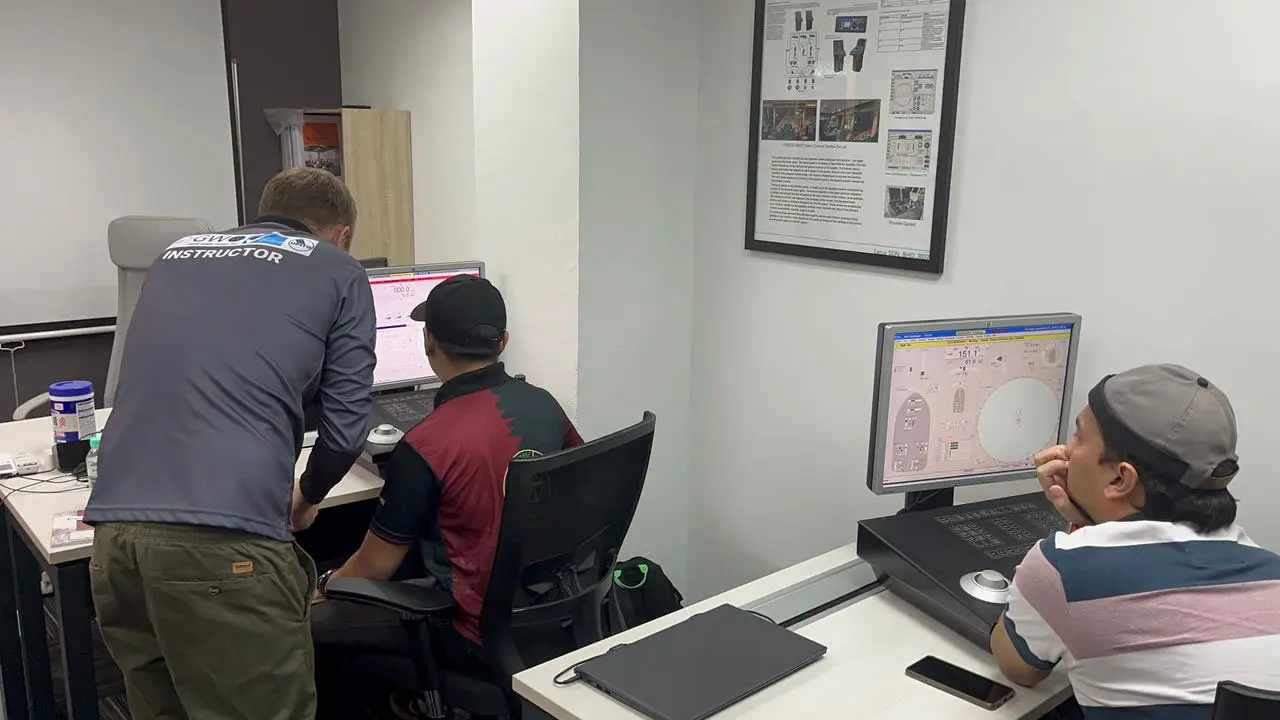
O treinamento é uma combinação de sessões teóricas e exercícios práticos em simuladores stand alone Kongsberg DP.
- Descrever os princípios de DP
- Descrever os vários elementos de um sistema DP, incluindo sistema de Referência de Posição, sensores, energia e indicar os requisitos de redundância, incluindo métodos
- Demonstrar conhecimento suficiente da operação prática de um sistema DP em vários modos e usar todos os recursos relevantes disponíveis nos exercícios realizados
- Descrever princípio, limitações e uso dos sistemas de referência de posição
- Descrever princípio, limitações e uso de sensores e equipamentos auxiliares
- Descrever arranjos típicos de energia e distribuição em embarcações diesel-elétricas e não diesel-elétricas. Descrever sistemas UPS e sistema PMS típico. Reconhecer requisitos de energia em embarcações DP
- Descrever vários sistemas de propulsão e thrusters e compará-los entre si
- Descrever procedimentos a serem seguidos em uma operação DP, incluindo planejamento usando informações da embarcação e do campo, planejamento de contingência, checklists, aproximação ao local de trabalho, comunicação, hand over
- Descrever o datum utilizado e compreender coordenadas UTM
- Descrever requisitos de documentação e log book
- Descrever arranjos feitos para operações DP em embarcações especializadas
- Descrever perigos associados a operações em águas profundas e rasas
Avaliação por testes de múltipla escolha. Nota mínima de aprovação 70%.
Os requisitos mínimos para ingressar no esquema DPO são:
Os participantes devem possuir um certificado STCW Regulation II/1 - II/2 - II/3 Deck ou Regulation III/1 – III /2 – III/3 Engine. O certificado válido deve ser apresentado no primeiro dia do curso como comprovação.
DPOs em potencial, que estejam em processo de treinamento para um certificado STCW, podem iniciar o esquema DP e concluir apenas o curso Induction/basic e 30 dias de Familiarization. O curso Simulator/Advanced e o treinamento de watch-keeping só podem ser concluídos após possuírem um certificado STCW de competência apropriado. Uma carta de uma empresa empregadora ou faculdade aprovada deve ser apresentada no primeiro dia do curso como comprovação.
Participantes que NÃO atendam ao acima são autorizados a participar do curso, mas apenas como aluno de 'DP awareness'. O certificado indicará apenas 'DP awareness'. O curso não será considerado como parte do esquema de treinamento de operador DP e o participante não será autorizado a treinamento futuro como DPO.
Quiere saber más sobre Curso de Indução em Posicionamento Dinâmico (NI DP Basic)
Entre em contato com nossa equipe de reservas no +6014 325 6625 ou envie um e-mail para a equipe em lerus.asia@lerus-online.com